Inspiring the Next Generation: How Angela Kettle is Rewriting the Narrative for Women in Ag
As we celebrate the United Nations’ International Year of the Woman Farmer, the global spotlight is firmly on the vital, yet often underrepresented, role women play in agriculture. Here at Mobble, we know that women have always been the backbone of farms and stations across globally - driving innovation, managing livestock, and keeping rural communities thriving.
But to inspire the next generation of female agricultural leaders, young girls need to see themselves in the stories that are told.
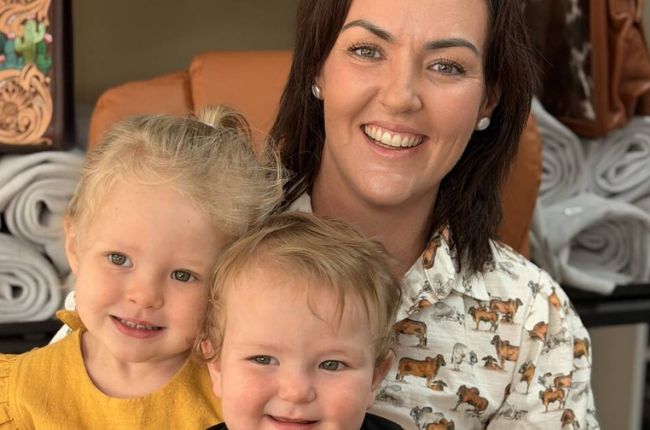
When Angela Kettle quietly launched Female Farm Tales, she set out to do exactly that. A serial entrepreneur, mother and former station hand, Angela noticed a massive gap on the bookshelves. Now, she is changing the narrative one children's book at a time.
Inspired by what she saw
Angela’s journey into agriculture didn't follow a traditional path.
“I don’t come from agriculture, I grew up watching McLeod’s Daughters, and I absolutely loved it,” Angela says.
She finished school knowing she didn’t want to go to university, her eyes set on working on a cattle station instead. “My mum thought I was crazy, but I found a traineeship as a station hand. After a wobbly start with her first place of employment, Angela went on to work for an incredible team. “I have a huge connection to them, and I fell in love with agriculture, working with cattle and being on the land. The lifestyle was amazing.”
Angela spent years working on farms, and then worked in mining, which is where she met her husband. They eventually settled in Blackwater, Central Queensland, where they are now raising their two children.
Where are all the women?
As their family grew, Angela and her husband became avid fans of picture books. Coming from a family of teachers on her husband's side, reading was a hands-on, daily ritual. However, Angela quickly noticed something missing in children's literature.
“There are no farming books where the female is the lead character," Angela realised. "Sure, women are there, but they are the mums, and the grandmas and the sisters and the daughters.” It made Angela look back to her own formative years. “The only reason I started working on stations was because I watched McLeod’s Daughters. I would never have thought to try that avenue of work if I had not seen it on TV.”
While her inspiration came from the screen, the reality of station life was a bit more grounded. “Well, it was nothing like McLeod’s Daughters,” Angela laughs. “Like nobody’s sitting in a bathtub at the bottom of a windmill, but I loved it.”
Angela explains that her mum gave her an incredibly strong work ethic. While her first station experience took advantage of that, the next farm she went to was amazing.
Angela was the only worker there; her boss was male, and his wife was training to become a doctor. She lived in an outhouse attached to his parents' house, and they treated her like family. “I just became one of the daughters. We’d watch footy on a Friday night, I would have a drink after work with them every day, and it was a great experience for me. My boss was amazing - he wouldn’t treat me differently from any other contractors that would come on. There was no distinction between whether you were a male or female."
The realisation hit her again while reading with her kids. "I came across George the Farmer books and thought, 'This is a really cool book. It’s great, but I wonder if there’s any examples of where I can show my daughter what I did on the land.' But it didn’t exist.”
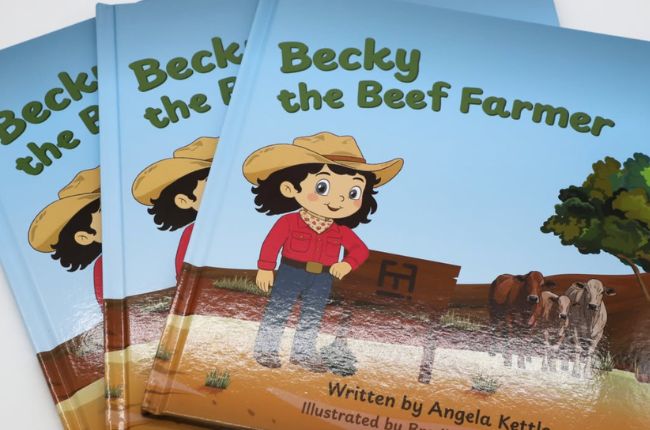
Introducing Becky the Beef Farmer
Angela’s entrepreneurial brain saw a gap that needed filling. Having always had an interest in the written word - writing poetry, stories, and songs at school - she decided to take matters into her own hands.
When the idea of Becky the Beef Farmer popped into her head, she started scribbling words down. Her mother-in-law, a retired teacher, helped finesse a few aspects, and soon she had the makings of a book - and the start of an entire series.
For Angela, it’s not just about showing the incredible roles that women have on farms and on stations; it’s about connecting children with the food system.
Becky the Beef Farmer follows a day in the life of Becky. She wakes up, goes out fencing, checks the water troughs, brands cattle, and feeds her dog. There’s also a hide-and-seek component in the book that kids are going to absolutely love.
With the first run of books currently en route to her, Angela is already planning the next characters in the line-up: Scarlett the Sheep Shearer, Daisy the Dairy Farmer, and Bianca the Beekeeper.
What Women Bring to the Land
When reflecting on the unique value women bring to the agricultural sector, Angela believes it comes down to perspective and adaptability. “As far as what women bring to farming, we have more intelligence in terms of problem solving and being able to evaluate 50 things at once. We can look at things and say, ‘Okay, well that’s not working, let’s see how we can fix this.’ Generally speaking men are such matter-of-fact beings, they’ll continue doing the same things because that’s how their father did it, and their father’s father did it. Women are more willing to try, to fail, and to change.”
Angela’s advice
When asked what advice she would give to young women wanting to get into agriculture, Angela explains, “Agriculture can be a very clique-y industry - like mining - and if you don’t fit into that it can be really hard. My advice would be don’t be afraid to leave. In my first ag job I thought, ‘I’ve got this amazing opportunity, I just need to put up with being treated like this because that’s just the way.’ But it wasn’t until I spoke with someone else and he said, ‘No, that’s not how it works. You need to leave. You’ll find someone else.’"
Ultimately, she wants young women to know that their potential on the land is limitless. “There’s nothing that women can’t do on farms. If you’re not afraid of getting your hands dirty, getting in there and being proactive, there’s nothing you can’t do.”
For Angela, despite the hard work, the rewarding parts of agricultural life remain beautifully simple. “The amazing sunsets, being able to ride your horses in incredible places, and the fresh air. Nothing compares to being out in the country. It’s just so freeing and invigorating.”
Support Angela and Becky the Beef Farmer
The future of farming is female, and it starts with the stories we tell our children. You can follow Angela’s Female Farm Tales here and sign up to be notified when the very first book in the series launches here.